Homepage | Religion | 31 May: Feast of the Visitation of the Blessed Virgin Mary
31 May: Feast of the Visitation of the Blessed Virgin Mary
26 May 2025
Reading Time: 5minutes
The Feast of the Visitation of the Blessed Virgin Mary commemorates a key moment in the history of Salvation. In the encounter between Mary and her cousin Elizabeth begins the spreading of God’s message as He becomes man.
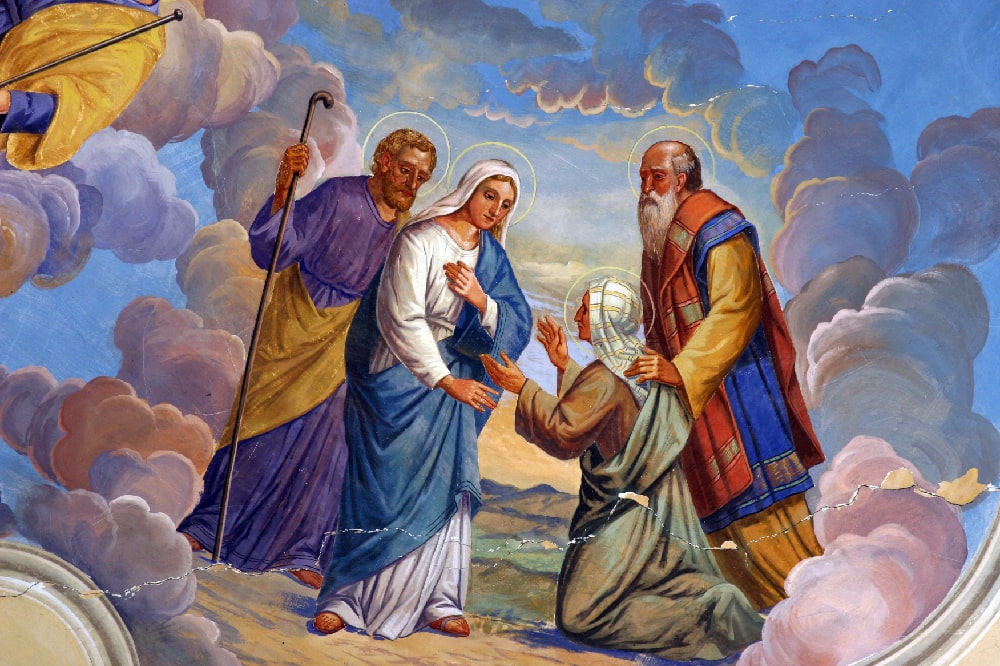
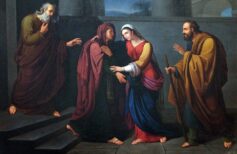
On 31 May, concluding one of the Marian months par excellence, the Visitation of the Blessed Virgin Mary is celebrated. This feast, one of the main Marian celebrations held each year in honour of the Virgin, commemorates her visit to her cousin Elizabeth. Mary had recently received a visit from the Archangel Gabriel announcing her forthcoming motherhood, in what we also know as the Feast of the Annunciation of the Lord, celebrated on 25 March. When Elizabeth saw her cousin and heard the miraculous news, she greeted her as the Mother of the Lord, and the child in her womb—who would become John the Baptist, the forerunner of Christ—leapt for joy.
The Feast of the Visitation is also known as the Feast of the Magnificat, from the hymn found in the Gospel of Luke, which recounts the episode and in which Mary gives thanks to God for having chosen her and for having freed Israel from slavery. Here is the opening of the hymn:
My soul magnifies the Lord and my spirit rejoices in God my Saviour, for He has regarded the lowliness of His handmaiden. Behold, from henceforth all generations shall call me blessed.
(Luke 1:46–48)
The meeting between Mary and Elizabeth offers many layers of interpretation and, in many ways, marks a transition from the past, represented by Elizabeth and the long wait for the Messiah, to the awareness that a new era has arrived, and the divine plan is about to unfold.
The preciousness of the materials fully express the concept of Made in Italy quality.
Elizabeth and Mary
It is the Evangelist Luke who tells us about Mary’s journey to her cousin’s house (Luke 1:39–55). Mary had been visited by the Angel, who not only announced her imminent motherhood but also that of Elizabeth, wife of Zechariah, a priest of the Temple in Jerusalem and member of the tribe of Levi—an elderly woman believed to be barren. So the young girl hurriedly set off from Nazareth in Galilee, possibly joining a caravan of pilgrims heading to Jerusalem, to assist her relative. Mary runs, eager to be of help, but also moved by the desire to share the angel’s announcement. In this haste we read Mary’s sense of mercy, but also her astonishment, her being overwhelmed by the mystery she had become part of, and at the same time, the wish to speak with another woman also chosen to play a part in God’s plan through a truly miraculous late pregnancy.
Elizabeth lived in Judea, in a town called Ain-Karim, a few kilometres west of Jerusalem. Mary set off and arrived at her cousin’s house three months before the birth of John. Upon seeing her, Elizabeth was filled with the Holy Spirit and praised her for being part of God’s plan, greeting her with the words:
Blessed are you among women, and blessed is the fruit of your womb! And how is it that the mother of my Lord should come to me? For behold, the moment the sound of your greeting reached my ears, the baby in my womb leapt for joy. Blessed is she who has believed that the Lord’s promises to her will be fulfilled.
Two extraordinary mothers meet, two annunciations that touch each other, in an encounter that might seem ordinary—just two relatives greeting each other. But Mary is carrying the Son of God, the Saviour of the world, while Elizabeth is carrying His forerunner, the one who will baptise Him and signal the beginning of His earthly mission. It is a meeting filled with joy, but also laden with a solemn gravity. It marks the point of no return, the beginning of a New World, and the two women can only sense it, feel it, without fully knowing the destiny awaiting the two children they carry—children who would go on to change the course of human history forever.
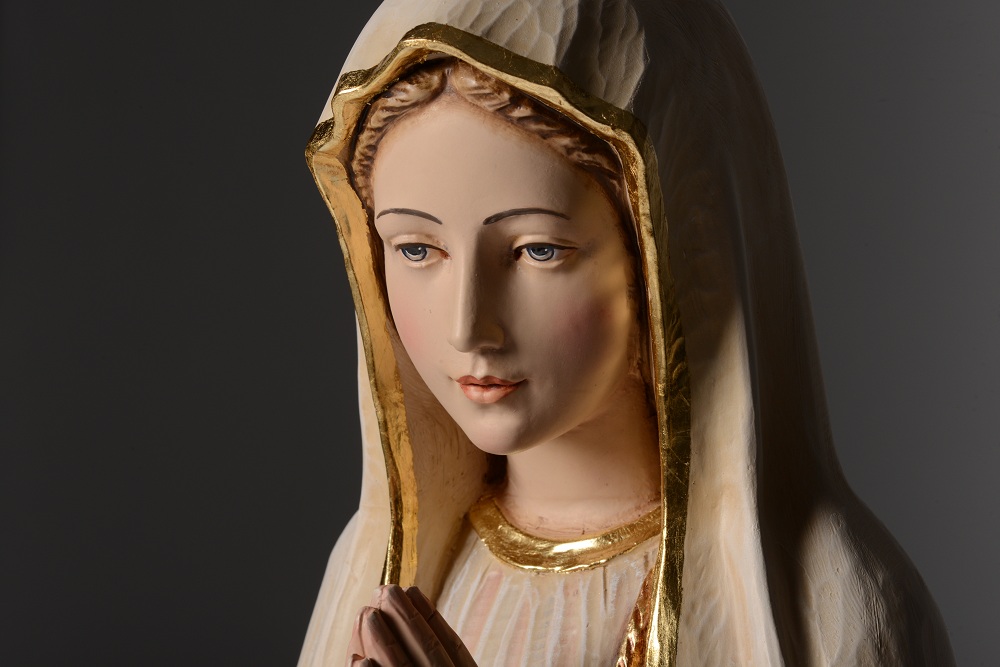
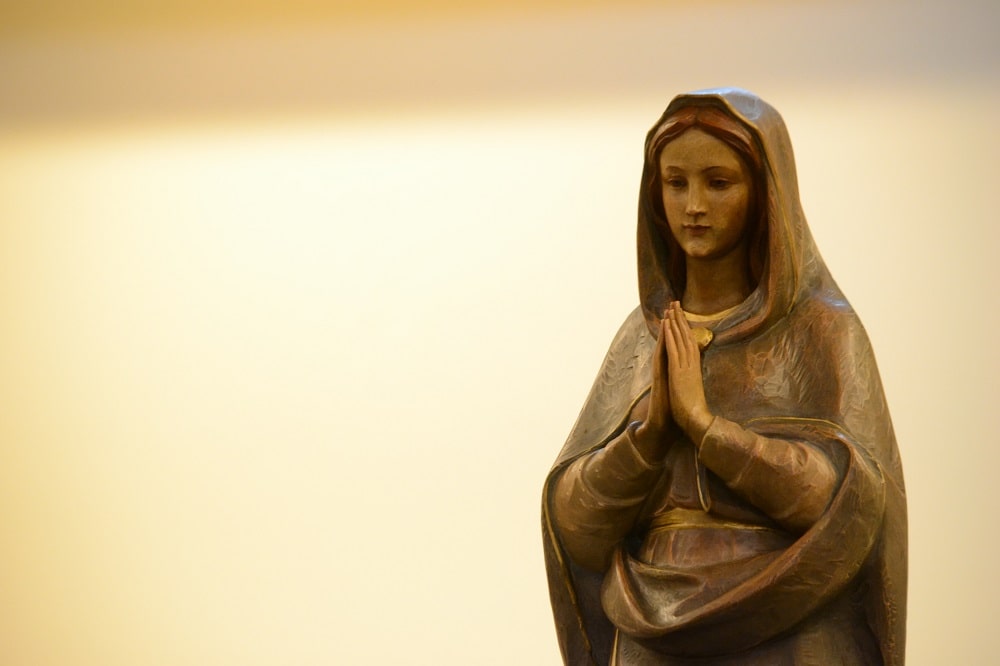
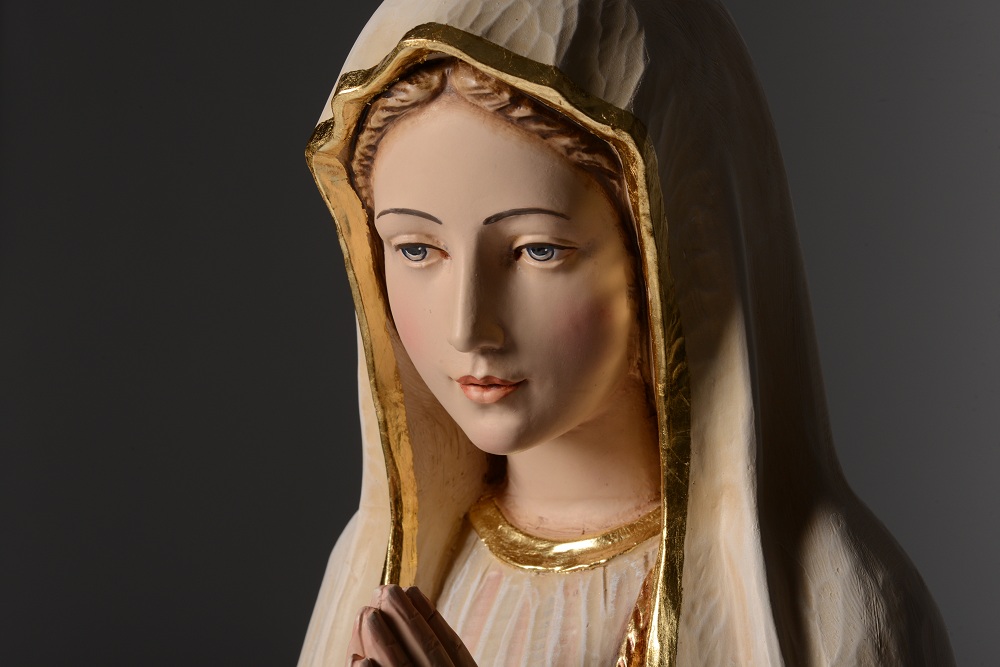
Wooden statue entirely made in Val Gardena, Italy. This is a high quality product, finely carved and detailed.
When is the Visitation of the Blessed Virgin Mary celebrated?
The feast was instituted in 1389 by Pope Urban VI, although it had already been celebrated by the Franciscan friars since 1263. Urban VI and, later, Pope Eugene IV made the Feast of the Visitation a topic of debate against the supporters of the antipope during the Great Schism. The feast was confirmed by the Council of Basel in 1441.
The Franciscans originally celebrated the Visitation on 2 July, but following the Second Vatican Council, the feast was moved to 31 May to conclude the May Marian celebrations. The Feast of the Queenship of Mary, which recognises and honours the regal dignity of the Virgin, was moved from 31 May to 22 August, the eighth day after the Assumption.
A collection of all our products dedicated to the Virgin Mary.
Prayer for the Visitation of the Blessed Virgin Mary
On the occasion of the Visitation of the Blessed Virgin Mary, a prayer written by Blessed Charles Eugène de Foucauld, a French religious who lived between the 19th and 20th centuries and was recently canonised, is recited. For him, Mary’s Visitation to Elizabeth held a powerful message of missionary vocation—an invitation to every baptised Christian to bring Jesus to others, just as Mary did, along with the extraordinary message of the Angel.
Mary, attentive Mother of the Visitation, teach us to listen to the Word—
a listening that makes us leap for joy and rush towards every situation of poverty where the presence of Your Son is needed. Teach us to carry Jesus silently and humbly, as You did! May our fraternities (families) be among those who do not know Him, to spread His Gospel not by words but by life; not by proclaiming Him but by living Him! Teach us to travel simply, as You did, with our gaze always fixed on Jesus present in Your womb: contemplating Him, adoring Him, and imitating Him. Mary, woman of the Magnificat, teach us to be faithful to our mission: to bring Jesus to others! O beloved Mother, this is Your very mission, the first that Jesus entrusted to You and which You graciously shared with us. Help us and intercede for us so that we may do what You did in the house of Zechariah: glorify God and sanctify others in Jesus, through Him and for Him! Amen!
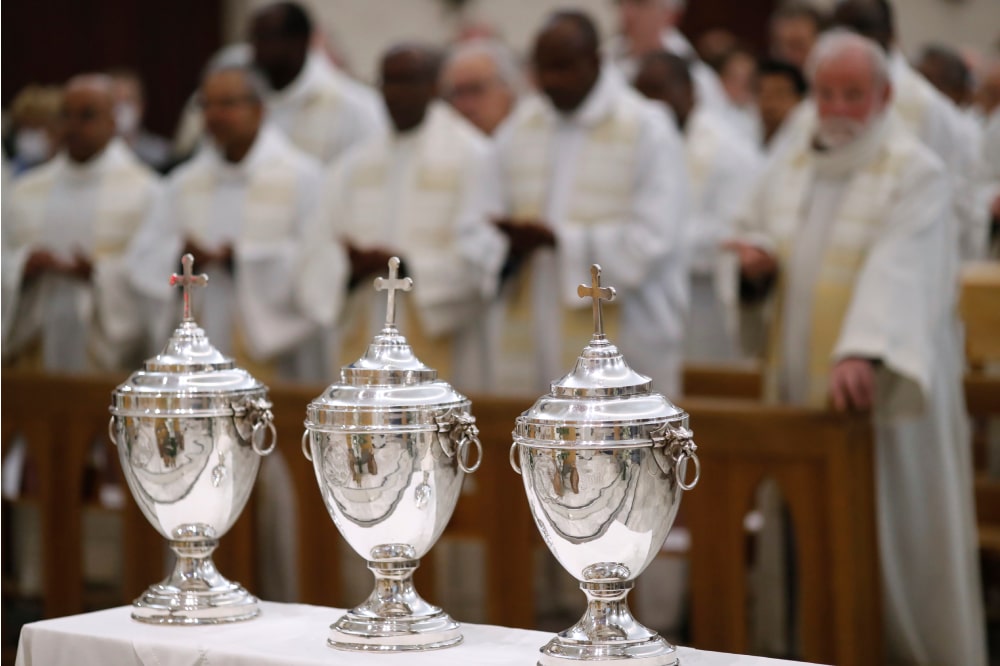
The chrism mass celebrates the mystery of the church, its unity and communion while waiting for Easter. It is also...
What’s the Future of Religion?
What’s the Future of Religion?
A Beginner’s Guide to Christianity
A Beginner’s Guide to Christianity
Mind-Blowing Statistics About Christianity You Need to Know
Mind-Blowing Statistics About Christianity You Need to Know
6305
Enter the Holyart world: $20 discount voucher valid on over 60,000 items
Come and discover Holyart, the largest e-commerce of religious articles in Europe and immediately receive a $20 voucher to use with your first purchase.
Check your mailbox: you will receive your discount within 5 minutes



 4 March 2026